
Wellington's Green Menace: Why Jamieson’s Pitch Plea Rings Hollow


Published 2026-11-12 · By Nikhil Patel (Lead Cricket Correspondent · New Delhi Desk)

The ball didn't just swing; it snarled. Watching the Indian top order shuffle across their stumps in Wellington was like watching a slow-motion car crash on a rainy highway. Matt Henry found a skiddy hard length early, and suddenly, the batting crease felt like a minefield. It was a grim, low-scoring slog—the kind of game where a single boundary feels like a miracle and a maiden over feels like a victory.
Then came the post-match chatter. Kyle Jamieson, with that characteristic Kiwi understatement, asked the press if they liked the bowler-friendly conditions. It was a cheeky nudge. But for the Indian camp, it was a pointed reminder of a recurring nightmare: the inability to survive the first ten overs when the air is thick and the grass is lush.
The T20 League Amnesia
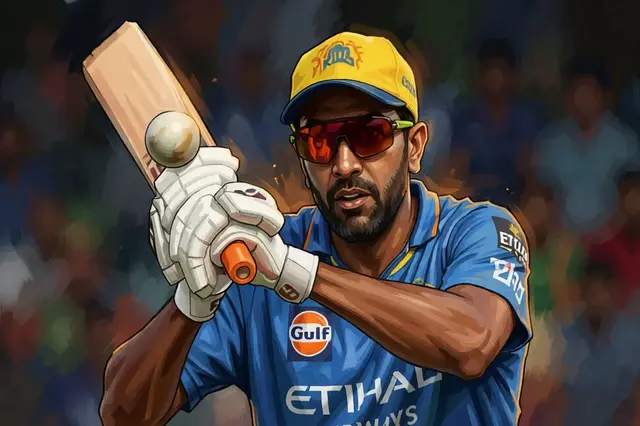
We have a problem with our muscle memory. Our batters have spent too long chasing 200+ scores on flat, concrete-like decks in franchise cricket. If you scroll through the latest t20 league stats & highlights, the trend is glaringly obvious. We are seeing boundary-percentages skyrocket while the art of leaving the ball has become a dead language. The modern Indian batter is programmed to hunt the short ball or slog-sweep the length; they've forgotten how to grind through a session of genuine swing.
The Ranji grind is disappearing. The patience required for a sticky red-soil track is being replaced by a desire for instant gratification. When you spend six months a year playing on pitches that offer zero lateral movement, a Wellington green-top feels less like a cricket pitch and more like a prank.
The Middle-Overs Choke
India didn't just fail at the top. The middle-overs choke was predictable. Once the openers were gone, the remaining batting lineup looked paralyzed. There was no intent to rotate strike, no willingness to play late, and certainly no appetite for the struggle.
- The Footwork: Static. Almost frozen.
- The Shot Selection: High-risk drives when the ball was still nipping.
- The Temperament: Fragile.
It felt like a T20 chase played in a Test match skin. The batters were looking for the gap rather than surviving the spell. In New Zealand, you don't look for gaps; you pray the ball doesn't hit your off-stump.
A Tactical Void
"The conditions were challenging, but the approach was complacent."
Let's be clear: the pitch was a nightmare. But the excuse of 'bowler-friendly conditions' is a cop-out. Great teams win on these tracks because they accept the misery of the first hour. They bow their heads, play with soft hands, and wait for the shine to wear off. India, instead, tried to fight the conditions. You cannot bully a swinging ball into submission.
The contrast was stark. The Kiwis looked comfortable in the chaos. They understood the rhythm of the ground. India looked like tourists who had forgotten their umbrellas in a monsoon.
The Path Forward
If this is the blueprint for the upcoming series, the coaching staff needs to stop obsessing over power-hitting metrics. The T20 era has given us fireworks, but it has robbed us of the defensive technique. We need more time on grass. We need batters who aren't afraid of a few bruised fingers or a scoreless hour.
Until the Indian batting lineup learns to embrace the slog, these low-scoring thrillers will always feel more like defeats than competitive draws. Jamieson can ask if we like these pitches all he wants. The real question is whether our batters can actually play on them.
Related coverage
- Gambhir Splits the Camp: A Tactical Gamble Before the Test Grind
- Santner’s Impact Player Surge: T20 League Stats & Highlights Rewrite IPL Strategies

Updated 2026-11-12 · Instant Rupee Deposits & 60s Withdrawals · 24/7 Support.
Access Official EuropeNugs Portal →Syndicate & Match Preview Editor · Bengaluru Desk
Varun Kulkarni has tracked IPL auctions, T20 toss trends, and fantasy combinations since 2016. From Bengaluru, he oversees EuropeNugs's live match previews and t20 league stats & highlights guides.
Reader Discussion & Match Reactions (5)4.8★ Community (5 Comments)
Verified Indian cricket reader perspectives & tactical debate on europenugs.com
The only number that matters here is ten: India's first-ten-over problem in Wellington. Chasing 200+ on flat decks has inflated boundary-percentages, but no telemetry dashboard fixes Matt Henry's skiddy hard length when the ball is snarling.
Before blaming T20 muscle memory, ask why the Indian top order was exposed so early in Wellington. Jamieson's press nudge is cheeky, but the real risk is treating a green-pitch collapse as pure technique while ignoring how Matt Henry's skiddy hard length set the trap.
The Ranji grind isn't nostalgia—it's the pathway that teaches Indian batters to leave the ball on red-soil tracks. Let franchise cricket keep chasing 200+; if that patience disappears, Wellington's first-ten-over collapse becomes the template.
The article's metric clash is stark: boundary-percentages up in T20 leagues, while the leave-the-ball rate collapses on lush Wellington grass. Matt Henry's skiddy hard length is the control variable, and India's first-ten-over sample keeps failing.
@Saurabh_NRR Ten overs is right, but the bigger flag is the missing leave. Jamieson's cheeky press nudge after that Wellington slog exposed how franchise habits reprogram batters; Ranji's red-soil patience is being traded for slog-sweeps.