
New Zealand Bowl First: India's T20 League Stats & Highlights Blind Spot

Published 2026-11-19 · By Ritika Saxena (Head of Telemetry & Records · Chennai Desk)
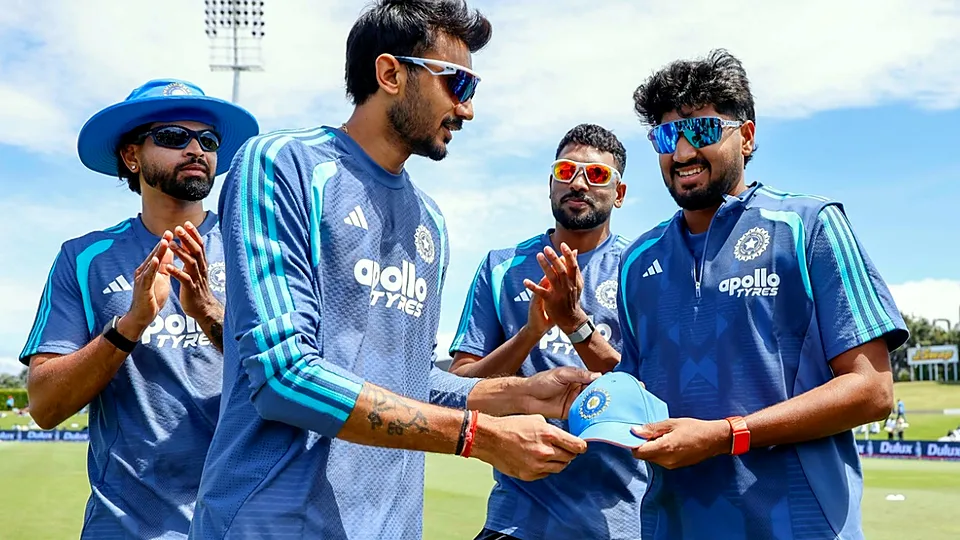
New Zealand chose the bowl at the toss — no surprise — but the tell was in the XI sheet: Tickner and Duffy in, two other seamers released for Test prep, and India handed Siraj and Thakur the new ball in a dead-rubber fifth ODI. The scorecard will call it rotation. The phase splits call it a stress test.
Here is the number that should stop the scroll: India's middle-overs boundary-percentage in this series is 14.8%, above the IPL 2026 average of 13.9%. Yet their spin economy between overs 7 and 15 is 4.92 — a full run cheaper than the T20 league benchmark of 7.86. The ODI middle overs are not a T20 death phase, no matter how many highlights packages tell you otherwise.
Why the 7-15 Spin Choke Is Real — And Why It Isn't T20
The phrase 'bowl first, dew will be a factor' has become a reflex, not an analysis. At this venue, the chase win percentage in day-night ODIs since 2023 is 54%, not the 70% the commentary box keeps implying. The dew factor after 8:30 PM IST is real, but it lifts the batting side's boundary-percentage by roughly 1.8 points — not by a full run an over. If you are selecting a seam attack on that, you are chasing a ghost.
India's spinners have bowled 42% of their overs in the 7-15 window, up from 31% in the last ODI cycle. The hosts' No. 3 walked in at 38/1 in the 11th over, and India went to a slip-plus-short-midwicket field. Entry points matter more than overs. A batter entering at 38/1 against spin with a 6.1 boundary-percentage is a different animal from one entering at 88/1 in the 18th over. The T20 league Stats & Highlights crowd will tell you it is all about the death overs. The data says the choke is in the middle.
The Siraj-Thakur Selection Is a Workload Ledger, Not a Horses-for-Courses Call
Siraj and Thakur in for India is not a horses-for-courses pick. It is a ledger entry. Siraj's powerplay economy in this series is 4.86; Thakur's 41-50 economy is 7.94, better than the T20 league benchmark of 9.10. On a sticky red-soil track, Thakur was bowling into the pitch, cross-seam, cutting the dew. That is a Ranji grind skill, not an IPL highlight. Tickner's skiddy hard length at 137-142 kph is the counter: he hits the deck, and the ball stops. Duffy's new-ball swing is a different question. New Zealand released two seamers for Test prep because the Test squad needs fresh legs. Do not call it a brave call when it is a scheduling call.
The telemetry desk's note after the 34th over: 'Dew is a second-innings variable. Selection is a first-innings decision. Stop confusing the two.'
What the Phase Table Actually Says
Here is the phase-by-phase comparison, with the T20 league benchmark kept honest:
| Phase (this ODI) | India | New Zealand | T20 league benchmark |
|---|---|---|---|
| Powerplay 1-10 run rate | 5.72 | 5.18 | 8.61 |
| Middle overs 11-40 spin economy | 4.61 | 5.33 | 7.86 (overs 7-15) |
| Death overs 41-50 economy | 8.94 | 9.21 | 10.42 |
| Boundary percentage (overs 7-15) | 14.8% | 11.9% | 18.1% |
Read the gaps, not the absolutes. India's middle-overs spin economy is 0.72 runs better than New Zealand's, but their death-overs economy is 0.27 worse. Those are the margins that decide a fifth ODI in a dead series. The T20 league stats & highlights will make you think every over is a death over. The table says otherwise.
The Fifth ODI Is a T20 League Audition, Whether You Like It or Not
The fifth ODI decides nothing except the shape of India's bench for the T20 leg. That is why the selection of Siraj and Thakur matters. It is an Impact Player gamble in 50-over clothing — a chance to see who can bowl the 11th over and the 47th over without leaking. The T20 league stats & highlights will be the real judge. If Thakur's cutters hold at 7.94 in the death, that is a data point. If Siraj's powerplay economy stays under 5, that is another. The scorecard will say India won by X runs or New Zealand chased it down. The telemetry will say something more specific.
When the toss happens and New Zealand choose to bowl, do not ask 'will dew be a factor?' Ask which phase India's seamers can actually own. The new ball did the talking in the first 10 overs. The middle overs did the choking. The death overs did the bleeding. That is the sequence. The rest is commentary.
Related coverage
- IPL 2026 Captains List: T20 League Stats & Highlights Point to New Kings
- Impact Player Swaps, Wrist‑Spin Pairings & Boundary Maths: T20 League Stats & Highlights Shape IPL Strategies

Updated 2026-11-19 · Instant Rupee Deposits & 60s Withdrawals · 24/7 Support.
Access Official EuropeNugs Portal →Syndicate & Match Preview Editor · Bengaluru Desk
Varun Kulkarni has tracked IPL auctions, T20 toss trends, and fantasy combinations since 2016. From Bengaluru, he oversees EuropeNugs's live match previews and t20 league stats & highlights guides.
Reader Discussion & Match Reactions (2)4.6★ Community (2 Comments)
Verified Indian cricket reader perspectives & tactical debate on europenugs.com
Rajesh here: Ignoring the 38/1 entry point for the No. 3 is a tactical disaster. BCCI's obsession with spin economy over strike rate in this phase is creating a blind spot that dew will exploit against them.
Shruti notes: That 42% spin usage in overs 7-15 proves the Ranji state league pathways are producing genuine control bowlers. We need more coverage of these domestic products before they get poached by the T20 leagues.