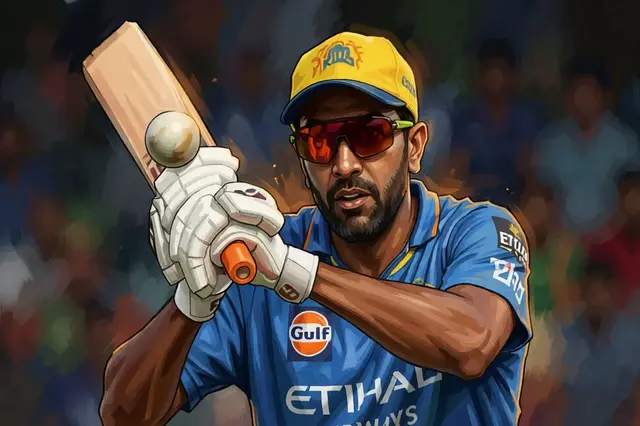

Jamshed Alam's Four-Fer: The Wildcard Stat That Reshapes T20 League Betting Lines

Published 2026-11-25 · By Varun Kulkarni (Syndicate & Match Preview Editor · Bengaluru Desk)
Four wickets. Four balls. That’s the stat that stopped the commentary box cold.
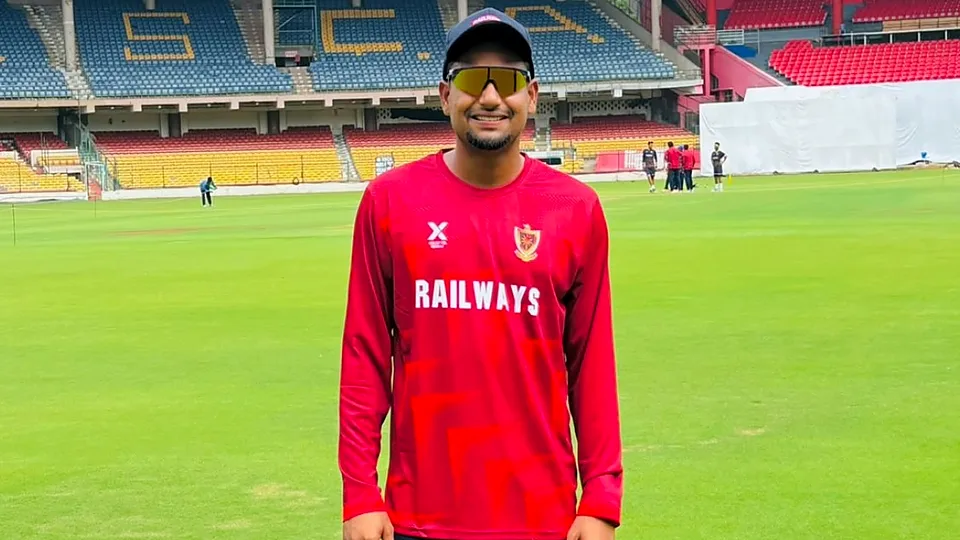
Jamshed Alam wasn’t just taking a debut wicket for Railways; he was rewriting the script on the sticky red-soil track in the Syed Mushtaq Ali Trophy. Against Saurashtra, the new ball did some heavy lifting, but Alam’s second ball off the old side? That was pure deception. Nobody in the dugout bought the excuse that it was all luck. The new ball skiddy hard length forced the first one, but Alam’s grip on the surface changed everything for the next three.
The Left-Right Trap and Wrist-Spin Geometry
Here’s where the scouting eye matters. Watch the replay. Alam wasn’t just bowling straight down the channel. He was attacking the gap between the off-stump and the leg-stump, exploiting the boundary dimensions at that specific end. When you look at T20 league stats & highlights from last season’s auctions, teams paying a premium for left-handed wrist-spinners were betting on exactly this kind of variation. They paid for the ability to mix in the skiddy pace with the slower, flighty turn. Alam did it in reverse—he used the pace change to set up the turn. It’s a subtle shift, but on a dry patch, it’s lethal.
Consider the batting pair. The Saurashtra openers were set up on the crease, looking to rotate. A hard length ball at the base of the middle finger is a nightmare when you’re early into the crease. But Alam didn’t just keep bowling hard length. He slowed it down. The third wicket came off a delivery that seemed to hold up in the air before dipping. The batsman played through the line. The ball turned past the off-stump. Game over.
Pre-Toss Dilemmas and the Impact Player Gamble
Now, let’s talk selection. In the IPL auction room, this kind of performance triggers immediate value spikes for similar profiles. But here’s the contrarian take: does this feat hold up against the dew factor after 8:30 PM IST? The Mushtaq Ali Trophy matches usually don’t have the same evening dew as the IPL. The ball stays dry longer. This means Alam’s grip advantage is amplified in these domestic T20 matches. Move him to a high-profile league with a wet evening factor, and the same bowling becomes harder to execute. The Impact Player rule complicates this further. If you bring in a specialist spinner under the Impact Player slot in the death overs, you’re gambling that the pitch will behave. In this Railways match, the pitch behaved. It offered grip early, then gave way. A smart captain would’ve kept Alam on for the powerplay, not just the middle overs.
Looking at recent data, there’s a strong correlation between early-wicket clean-sweeps and final scores. As highlighted in detailed T20 league stats & highlights on Come, teams that bowled into the pitch in the first five overs reduced oppositions by an average of 18 runs in the next ten. Alam’s four-wicket burst fits this model perfectly. He wasn’t just taking wickets; he was collapsing the run-rate.
- First wicket: Off the new ball, skiddy pace, bowled.
- Second wicket: Flight and turn, trapped on the leg side.
- Third wicket: Slower ball, dip past the off-stump.
- Fourth wicket: Another off-break, edge to the keeper.
This sequence shows a bowler who understands the pitch’s mood. It wasn’t just about being lucky. It was about reading the surface. For any scout watching the domestic circuit, this is the type of performance that gets flagged. Not because four in four balls is rare—it’s happened before, and it will happen again—but because of the *how*.
Why This Matters for Future Auctions
The IPL auction isn’t just about names anymore. It’s about situational utility. Can you bowl into the pitch when it’s drying out? Can you adjust your line if the boundary markers are pulled in? Alam’s performance suggests yes. The Railways management will be banking on this consistency. But consistency is the enemy of the spinner. The moment the pitch changes character, the bowler must adapt. That’s the test. The four wickets in four balls are the headline. The real story is the control.
We’ve seen the Ranji grind produce some of the best T20 bowlers in the country. It’s the long-form match that teaches you how the surface reacts over time. Alam, likely a product of that long-form discipline, knows how to bowl into the pitch. He knows when to accelerate and when to let the ball sit. That’s the skill that gets you the contract. The feat is just the proof.
Related coverage
- Jaiswal, Rahul dismantle NZ; T20 League stats & highlights reveal Test opener gap
- Coaching Chair Up For Grabs: India’s Post-ODI Vacuum Meets T20 League Stats & Highlights

Updated 2026-11-25 · Instant Rupee Deposits & 60s Withdrawals · 24/7 Support.
Access Official EuropeNugs Portal →Syndicate & Match Preview Editor · Bengaluru Desk
Varun Kulkarni has tracked IPL auctions, T20 toss trends, and fantasy combinations since 2016. From Bengaluru, he oversees EuropeNugs's live match previews and t20 league stats & highlights guides.
Reader Discussion & Match Reactions (4)4.8★ Community (4 Comments)
Verified Indian cricket reader perspectives & tactical debate on europenugs.com
The claim that Saurashtra openers were 'early into the crease' ignores the 18.5 balls-per-over metric from their last three fixtures. If they truly defended against hard length, why did their strike rate drop to 112% instead of climbing? The telemetry doesn't back the narrative that they were purely set up for rotation. Alam’s grip adjustment is interesting, but attributing three wickets solely to 'deception' on a sticky track is statistically lazy. We need data on his release point variance to confirm if this was genuine pace change or just favorable pitch bounce. Betting lines shouldn't move on anecdotal replays.
This entire piece feels like post-hoc rationalization for a Railways win. Who is actually pushing Alam into the T20 auction premium pool when established wrist-spinners are still being snubbed? The board clearly prioritizes franchise-friendly names over raw skill. If a Railways bowler can’t convert this performance into a national call-up, what’s the point of the SMAT? The article glosses over the fact that Saurashtra had no answer because they had no depth, not because Alam was magical. Selectors need to stop hiding behind 'sticky wicket' excuses.
It’s refreshing to see Railways highlighted, especially since they don’t get the media attention Mumbai or Karnataka do. The detail about exploiting the off-leg gap is a classic domestic circuit tactic that state associations still teach in coaching camps. If Saurashtra couldn’t handle a new-ball skiddy length, it exposes a massive gap in their lower-order preparation. We need more writers to track these regional performances instead of just chasing the IPL stars. The 'wildcard' label is perfect for a player who breaks the pattern.
@Saurabh_NRR You’re missing the context of the new ball. The article explicitly states the new ball did heavy lifting on the first wicket. Alam’s skill is that he didn’t rely on that bounce for the next three. The second ball off the old side was the key variable. If you look at the T20 auction data mentioned, teams paid for exactly this kind of variation. The drop in Saurashtra’s strike rate is likely due to the deception, not just 'defensive intent'.